
AUTOMATE PLANET · PET GROOMING INTAKE · PRACTICAL AI GUIDE
Pet grooming intake: an AI checklist before confirming an appointment
A grooming business can use AI to collect the pet’s basic details, requested service, coat information and owner-reported handling concerns before staff confirm an appointment. The assistant can organize the request and explain preparation instructions your team approves. Groomers retain decisions about service suitability, time, handling and any need for another professional’s input.
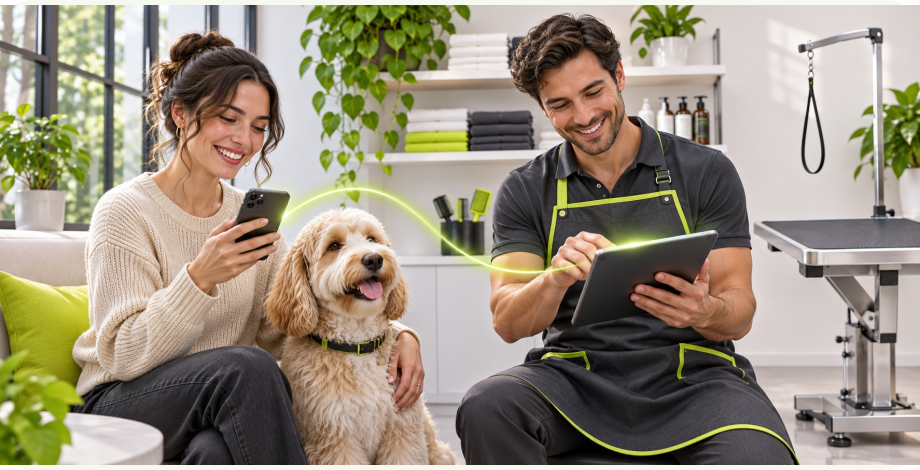
The workflow at a glance.
- 1Pet requestService and current details
- 2Groomer reviewFit, time and preparation
- 3AppointmentApproved booking path
Understand the grooming request before showing a slot
Two pets asking for the same service may need different time and handling. A bare appointment form can hide those differences until arrival. A useful intake workflow gives the groomer enough context to decide the next step while keeping the owner’s experience short and welcoming.
Separate a requested appointment from a confirmed booking. Let the owner provide an approximate answer when they are unsure about coat condition or service choice. That uncertainty is useful information for the groomer, not a reason for the assistant to choose a service or invent a duration.
Prepare services and staff-review questions
Maintain the service menu, size categories if used, preparation instructions, relevant business policies and the questions that require groomer review. Use your actual operational rules rather than a generic breed-to-service assumption. Identify who can update the catalog when staffing or offered services change.
Decide which records belong in the booking system and which should be restricted to staff. Collect only information necessary for the service request. Any medical or behavior-related concern should follow the groomer’s approved review route, without the assistant diagnosing the animal or assuring safe handling.
Your implementation worksheet
Use this original worksheet with the person who owns the workflow. Fill it from your current process before connecting tools. A blank answer is a design question to resolve, not an invitation for the assistant to guess.
| Define this | Record or decision | Who confirms it |
|---|---|---|
| Pet identity | Correct pet and owner relationship | Owner and staff |
| Service request | Owner’s preference and any uncertainty | Groomer |
| Coat details | Current owner-reported condition | Groomer assessment |
| Handling concern | Relevant concern without a safety assurance | Qualified staff |
| Appointment fit | Approved duration, groomer and availability | Booking owner |
| Preparation | Current staff-approved instructions | Business manager |
Capture the pet, service and practical constraints
Ask for the pet’s identity, approximate size, requested service and owner contact. Then collect relevant coat details, previous grooming context and owner-reported handling concerns. If a photo is part of your approved intake, explain its purpose and provide the supported upload path rather than accepting files into an unmanaged inbox.
For returning clients, confirm that saved details still apply. A previous appointment’s duration or service does not establish the condition of the coat today. Keep each pet associated with the correct owner and avoid applying one household pet’s instructions to another.
Let the groomer choose the right booking path
Route straightforward requests through the approved booking rules and send uncertain cases to staff. The groomer can confirm service, duration and any preparation conversation. Only then should the workflow offer a compatible appointment through the authoritative booking system.
Use clear field help and required-versus-optional distinctions, consistent with W3C form guidance. A failed booking should remain a request for help; the customer should not receive a confirmation merely because the questionnaire was completed.
Test the exceptions before launch
Route questions before confirming
The following are proposed acceptance checks, not reported client test results. Run them with fictional records in an authorized test environment. For each case, record the expected outcome, actual result, reviewer and correction. Test the normal path as well, from the first request through the final saved state.
| Try this case | Expected behavior |
|---|---|
| Owner is unsure which service fits | Offer a staff review path rather than inventing a recommendation. |
| Two pets share an owner contact | Keep separate pet records and appointment requirements. |
| Owner reports a handling concern | Require the configured groomer review before confirmation. |
| Saved pet details differ from the new request | Ask for clarification and preserve the updated information. |
| Appointment creation fails | Keep the request pending and provide a real staff next step. |
Start with one useful workflow
Start with one mobile grooming request and a clear staff-review queue. Check whether the groomer can determine service fit and the next action from the saved details. Keep optional questions optional when they do not change the decision.
Automate Planet can connect approved intake, customer records and supported booking actions. Later phases can add preparation reminders and return-visit invitations within your communication preferences, while staff control the service rules.
Explore our current industry packages and the broader industry automation guide. The selected package, supported connections and agreed scope determine what we implement. We can review your current tools before recommending a replacement.
Measure the work that actually changes
Measure requests needing clarification, appointments requiring rescheduling for service fit and staff time spent reconstructing pet details. Separate completed forms from confirmed and attended appointments.
Review a small set of intake records with the groomers. If a field is often empty or misunderstood, rewrite the question before adding more automation. A shorter form is useful only if it still prepares the team.
Connect useful search content to a clear next step
Answer common questions about preparing for a grooming appointment, choosing a request path and when to talk with staff. Use your actual services and policies, with a clear booking or inquiry action.
Connect the guide to service pages and the request form. Avoid guarantees about animal health, behavior or outcomes that cannot be established from an online conversation.
Google’s AI-search guidance does not promise inclusion in AI answers. Keep your public answers current and link them to a working inquiry path.
Common questions
Can the assistant choose the right grooming service?
It can explain approved service descriptions and collect the owner’s preference. Uncertain coat, handling or suitability questions should reach a groomer before the appointment is confirmed.
Can it diagnose a skin or coat problem?
No. This is an administrative intake workflow. Medical concerns should follow the business’s approved professional referral or staff-review process.
Should every returning pet fill out the whole form?
Authorized records can reduce repetition, but current service and relevant changes still need confirmation. Do not assume the previous visit describes the pet’s present needs.
Can one owner book several pets?
Yes, if the booking workflow keeps each pet’s service, duration and review requirements separate and checks capacity for the combined request.
Do photos make the booking automatically safe?
No. A photo may help staff prepare when collected through an approved route, but it does not replace professional assessment or establish handling suitability.
What should we implement first?
A short request form, approved service information and a groomer-owned review queue. Add direct booking only when the service-fit and scheduling rules are dependable.
Sources and editorial approach
- W3C WAI: clear form instructions
- Google Search Central: AI features and your website
- Automate Planet: pet grooming services and packages
How this page was prepared. AI-assisted writing based on our workflow design and the primary sources linked here. This is implementation guidance, not a report of a completed client deployment.
This guide presents our proposed implementation method, supported by the technical references linked here. The worksheet and launch checks are planning tools; they are not results from a completed client deployment. Artwork shows the intended workflow without customer data.
Build the first useful connection.
Tell us about your current process, the tools you use and the step that needs attention. We can help turn this guide into a scoped implementation plan.
Plan my grooming intake workflowExplore industry packagesYour next chapter.
Starts here.
Tell us what you want to make easier. We’ll help connect the right people, processes, and AI.
Make time for what’s next.
A one-hour consultation to explore your goals, workflows, and opportunities.